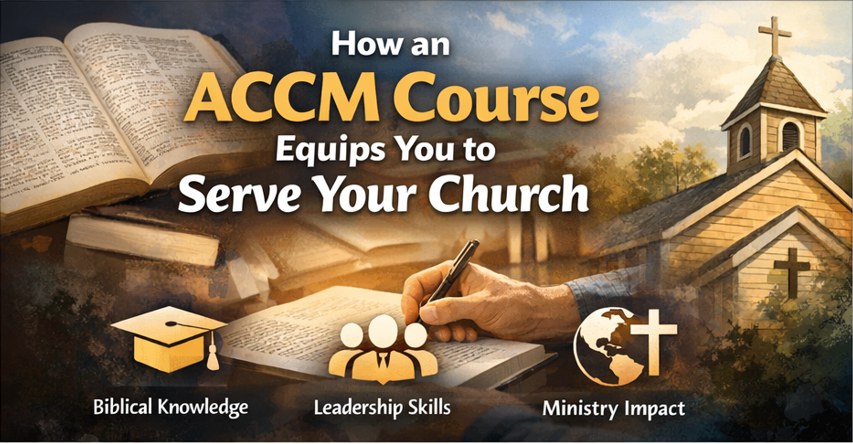
Serving your local church well takes more than good intentions. Whether you’re already involved in ministry or feeling a quiet nudge to step up, having the right training can transform how you show up for your congregation. That’s where an ACCM (Ambassadors College of Christian Ministry) course comes in. Available through admin.ambascol.org, these courses are designed to give everyday believers—not just future pastors—the tools they need to make a real difference where they worship. If you’ve ever wondered whether formal ministry training could be worth your time, here’s a closer look at how an ACCM course can shape you into someone your church genuinely relies on.
Building Practical Ministry Skills That Strengthen Your Church
One of the biggest advantages of an ACCM course is how grounded it is in practical, hands-on ministry. Instead of getting lost in heavy academic theory that’s hard to apply on a Sunday morning, you’ll dive into the kind of skills that actually matter when you’re leading a small group, planning a service, or walking alongside someone who’s struggling. From sermon preparation to pastoral care basics, the curriculum is built around the everyday realities of church life.
What makes this especially valuable is that churches often run on the shoulders of volunteers who’ve never had any formal training. They’re doing their best, but they sometimes feel underprepared when difficult situations arise—a grieving family, a youth ministry challenge, or a leadership conflict. An ACCM course fills those gaps. You begin to understand not just what to do, but why certain approaches work better than others, which builds confidence in your role.
Even more, the skills you pick up translate directly into stronger ministries. A worship leader who understands biblical theology brings more depth to their song selection. A small group facilitator who’s studied discipleship principles can guide richer conversations. A children’s ministry worker who’s learned about spiritual formation knows how to plant seeds that last. The whole church benefits when its servants are equipped, and ACCM exists to make that equipping accessible.
Becoming a Trusted Servant Within Your Local Community
Ministry doesn’t stop at the church doors—and neither does an ACCM education. The courses are designed with the understanding that your congregation is meant to be a blessing to its neighborhood, town, or city. As you grow in your training, you’ll start seeing your community through a different lens: noticing needs, recognizing opportunities to serve, and learning how to engage people meaningfully without being pushy or performative.
Trust is earned slowly, and it’s earned by people who show up consistently and competently. When local residents see church members who can listen well, offer wise counsel, organize helpful outreach, and represent their faith with humility, that trust grows. An ACCM course helps you become that kind of person—someone whose word carries weight not because of a title, but because of the depth of care and understanding you bring. That credibility opens doors that flashy programs never could.
Beyond individual reputation, your training strengthens the church’s collective witness in the community. Imagine a congregation where multiple members have taken the time to study ministry seriously through admin.ambascol.org—where leaders are thoughtful, volunteers are prepared, and outreach is intentional. That kind of church becomes a genuine asset to its community, a place people turn to in hard times. Investing in your own development through ACCM is really an investment in everyone your church touches.
At the end of the day, taking an ACCM course isn’t about adding letters after your name or climbing some kind of ministry ladder. It’s about loving your church and your community well enough to prepare for the work God has placed in front of you. Whether you’re a longtime volunteer or just starting to explore deeper service, the resources available at admin.ambascol.org can help you grow into the kind of servant your congregation needs. The investment of time and effort pays off in ways you can’t always measure—but the people you serve will feel the difference.